
Dental Sealants
Prevent cavities before they start with dental sealants
Allure Family Dental & Specialty Group in Huntington Beach offers dental sealants — a painless, non-invasive coating that reduces cavity risk on molars by up to 80%. Applied in minutes with no drilling or anesthesia, sealants protect the deep grooves and pits where brushing alone cannot reach. Dr. Franco Miele recommends sealants for children as soon as permanent molars erupt and for adults with cavity-prone teeth. Schedule your visit or call 714-274-7736.
What Are Dental Sealants?
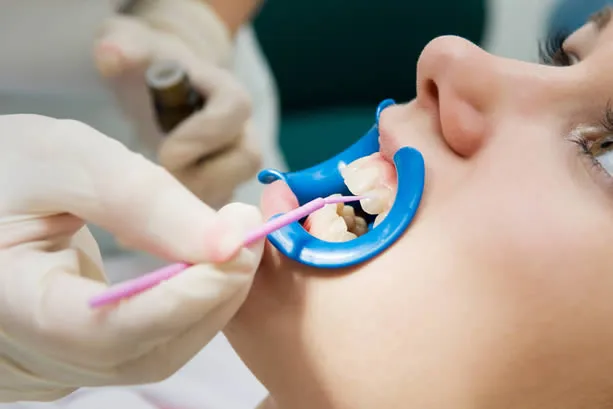
Dental sealants are a preventive dental treatment designed to protect the chewing surfaces of your teeth from decay. They are a thin, plastic coating that is painted onto the grooves and pits of your teeth, forming a protective barrier against harmful bacteria and acids that can cause cavities.
Sealants are most commonly used on the molars and premolars, which are the teeth at the back of the mouth that are used for chewing. By providing an extra layer of protection, dental sealants can help to reduce the risk of tooth decay and the need for more extensive dental treatment in the future. If you're looking to maintain good oral health and prevent cavities, dental sealants may be a smart choice for you.
Before applying sealants, we examine each tooth individually. If a groove already shows early signs of decay, we address that first — sealants are placed only on healthy, intact enamel. We use BPA-free resin materials and verify the seal on each tooth with a bite check before the patient leaves.
At each follow-up visit, we inspect existing sealants for wear or chipping and reapply if needed — ensuring continuous protection without gaps.
Reviewed by Dr. Franco Miele · Allure Family Dental & Specialty Group, Huntington Beach
What to Expect During a Dental Sealant Application
Cleaning: First, your dentist will clean the teeth that will receive the sealants. This ensures that no debris or bacteria are present on the tooth surface, allowing the sealant to bond properly.
Drying: Once the teeth are clean, your dentist will use an air compressor or other drying tool to ensure that the tooth surface is completely dry. Moisture can interfere with the bonding process, so this step is crucial.
Etching: Next, your dentist will apply a mild acid solution to the tooth surface. This etches the surface of the tooth, creating a rough surface that helps the sealant bond to the tooth.
Application: Once the tooth surface is prepared, your dentist will apply the sealant to the grooves and fissures of the tooth using a small brush. The sealant is a liquid resin that hardens quickly once applied.
Curing: Finally, your dentist will use a special light to cure or harden the sealant. The light activates the resin, causing it to harden and form a protective barrier on the tooth surface.
The entire process typically takes only a few minutes per tooth and is painless. With proper care, dental sealants can last for several years, providing long-lasting protection against tooth decay.
What Are the Benefits of Dental Sealants?
Dental sealants are a highly effective preventative measure that offer several benefits to individuals of all ages:
Cavity Prevention
Sealants reduce the risk of decay in the permanent molars by up to 80%, making them one of the most effective preventative treatments available for children.
Painless Application
No drilling, no shots, no discomfort. The entire sealant application process takes only a few minutes per tooth and is completely non-invasive.
Long-Lasting Protection
When properly applied and maintained, dental sealants can protect teeth from decay for up to 10 years — with routine monitoring at each checkup.
Cost-Effective
The CDC estimates that for every dollar spent on sealants, $8–$38 can be saved in future dental treatment costs by preventing fillings, crowns, and root canals.
Safe and Proven
Dental sealants have been recommended by the ADA and CDC for decades. They are safe for patients of all ages and have an extensive track record of clinical effectiveness.
Who Is the Ideal Candidate for Dental Sealants?
- Children and teenagers: The American Dental Association recommends that children and teenagers receive dental sealants as soon as their permanent molars come in, typically around ages 6 and 12.
- Individuals with deep grooves or fissures: Teeth with deep grooves and fissures are more prone to decay, as food particles and bacteria can get trapped in these areas.
- Individuals with a history of cavities: If you have a history of cavities, sealants can provide an extra layer of protection, reducing the likelihood of future cavities.
- Individuals with orthodontic appliances: Braces and other orthodontic appliances can make it more difficult to properly clean teeth, increasing the risk of decay.
- Adults with healthy teeth: While often associated with children, adults with healthy teeth can also benefit from this preventative measure.

What Are the Statistics on Dental Sealants?
- Reduced risk of decay: According to the CDC, dental sealants can reduce the risk of cavities in the permanent molars by up to 80%. In children aged 6–11, sealants can reduce decay risk by almost 40%.
- Cost-effective: The CDC estimates that for every dollar spent on dental sealants, between $8 and $38 can be saved in future dental treatment costs.
- Long-lasting protection: When applied and maintained properly, dental sealants can provide protection against decay for up to 10 years.
- Wide-reaching impact: According to the American Dental Association, sealants can reduce the incidence of cavities by up to 80% in both children and adults.
What to Expect During Your Sealant Appointment
The entire appointment takes about 15–30 minutes depending on how many teeth are sealed. Here is the process step by step:
- 1. Tooth cleaning. Each tooth is thoroughly cleaned and dried. No drilling is involved — just a gentle polish to remove any debris.
- 2. Acid etch. A mild etching solution is applied for a few seconds to roughen the tooth surface. This helps the sealant material bond securely. The etch is then rinsed off and the tooth is dried again.
- 3. Sealant application. The liquid resin is painted into the grooves and pits of the tooth using a small brush. It flows into all the crevices that are difficult to clean with a toothbrush.
- 4. Curing light. A special UV light is held over the tooth for 20–30 seconds, hardening the sealant into a durable protective shield.
- 5. Bite check. Dr. Franco Miele or the hygienist checks your bite to ensure the sealant feels natural and isn't too thick. Any excess is smoothed away.
Common Concerns About Dental Sealants
Parents and patients often have these questions before choosing sealants. Dr. Franco Miele addresses each one at your visit.
"Are dental sealants safe? What about BPA?"
Dental sealants have been recommended by the ADA, CDC, and American Academy of Pediatric Dentistry for decades. While some sealant materials contain trace amounts of BPA, the exposure is extremely low — less than what you'd get from handling a receipt or breathing dust. At Allure Family Dental & Specialty Group, we use BPA-free sealant materials for additional peace of mind.
"Can adults get dental sealants, or are they just for kids?"
Adults absolutely can benefit from sealants. If you have deep grooves on your molars, a history of cavities, or teeth that haven't yet developed decay, sealants provide the same protective benefit for adults as they do for children.
"What if a sealant falls off or chips?"
Sealants are checked at every routine visit. If one has worn or chipped, we can reapply it in minutes — the same quick, painless process as the original application. A partial sealant still provides some protection, but reapplication ensures the full barrier is restored.
Risks and Considerations of Dental Sealants
Dental sealants are one of the lowest-risk procedures in dentistry. However, informed patients make better decisions:
- Sealants can only be placed on healthy enamel — if decay is already present, it must be treated first
- Sealants may chip or wear over time and need periodic reapplication (checked at every visit)
- In rare cases, a sealant may trap bacteria under the coating if applied over undetected early decay — this is why Dr. Franco Miele examines each tooth before application
- Sealants protect only the chewing surfaces — daily brushing and flossing remain essential for the smooth surfaces and spaces between teeth
Frequently Asked Questions About Dental Sealants
Dental sealants are made of a plastic-like material called resin. The resin flows into the grooves and pits of the tooth and hardens under a curing light to form a smooth, protective shield.
When applied and maintained properly, dental sealants can last up to 10 years. They are checked at every routine visit and can be reapplied quickly if any wear is detected.
No, dental sealants are painless and do not require any numbing or anesthesia. The application involves cleaning, painting, and light-curing — no drilling at any point.
Dental sealants are typically used on the molars and premolars, which are more prone to decay due to their deep grooves and fissures. They are not usually placed on front teeth, which have smoother surfaces.
Yes. At our Huntington Beach dental office we offer dental sealants to patients from Huntington Beach and the surrounding area. Contact our office today to schedule an appointment.
Most dental insurance plans cover sealants for children under 14–18, depending on the plan. Coverage for adults varies. We verify your benefits before your visit and will let you know your coverage and any out-of-pocket cost.
The ADA recommends sealants as soon as the first permanent molars erupt — typically around age 6 for the first molars and age 12 for the second molars. Sealing these teeth early provides the most protection during the cavity-prone years.
No. Sealants are a preventative treatment and should only be placed on healthy enamel. If decay is already present, Dr. Franco Miele will treat the cavity first. Sealants can then be placed on the remaining healthy teeth to prevent further decay.
Medical Disclaimer
This content is for informational purposes only and does not constitute dental or medical advice, diagnosis, or treatment. Dental sealants are a preventative measure and are not a substitute for daily brushing, flossing, and regular dental visits. Sealants may need periodic reapplication. Consult Dr. Franco Miele or a qualified dental professional regarding any questions about your oral health. Individual results may vary.
Protect Your Teeth with Dental Sealants
Contact our office to learn how dental sealants can help prevent cavities and keep your smile healthy.